
When Wet Roads Turn Risky: What Every Roseville Driver Should Know
When fall and winter rains arrive in Roseville, they bring more than cool air and changing colors. They also turn roads into unpredictable hazards. Wet leaves, slick asphalt, and poor visibility combine to create the perfect conditions for accidents. Every year, collisions spike across Placer County and the greater Sacramento region as drivers underestimate how dangerous “a little rain” can be.
Many of these crashes could be avoided with better awareness and preparation. But even when weather plays a role, California law holds drivers responsible for operating their vehicles safely under the conditions. That means a wet road isn’t a free pass for negligent driving. Understanding how liability works in rain-related accidents can make a major difference if you’re ever involved in one.
The Science of Slippery Roads
The first rain after a long dry period is often the most dangerous. Oil, grease, and debris that have built up on the roads mix with water to form a thin, slick layer. Tires that normally grip well can suddenly lose traction, especially during braking or sharp turns.
Fallen leaves make matters worse. When they get wet, they act like ice, reducing friction between your tires and the road. Even with good tires, your stopping distance increases significantly. Combine that with low visibility from rain or fog, and it’s easy to see why rear-end and intersection collisions rise during rainy months in Northern California.
Mechanical factors also contribute. Worn tires, weak brakes, or misaligned wheels can make it harder to control your vehicle on slick pavement. Proper maintenance is one of the best ways to prevent wet-weather accidents.
Common Rain-Related Accidents in the Sacramento Region
Rear-End Collisions
When visibility drops and stopping distances increase, drivers often follow too closely without realizing it. A light tap on the brakes in front can turn into a serious crash behind. Even low-speed rear-end collisions can cause whiplash or back injuries that don’t appear until days later.
Hydroplaning
Hydroplaning happens when a layer of water builds up under your tires, causing your car to skid uncontrollably. It can occur at speeds as low as 35 mph, particularly on highways like I-80 or Highway 65 near Roseville where pooling water is common.
Intersection Crashes
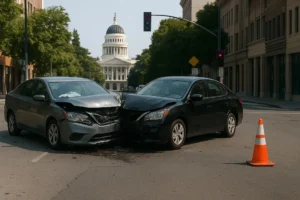
Rainy weather limits visibility at intersections, where vehicles cross paths at different angles. Drivers often misjudge distances or slide through stoplights and stop signs, leading to side-impact or “T-bone” collisions.
Pedestrian and Cyclist Accidents
Dark skies and rain make pedestrians and cyclists harder to see. Wet crosswalks and bike lanes further increase the risk. Drivers must use extra caution, especially in busy areas like downtown Roseville or along Douglas Boulevard.
Liability and Fault in Wet-Weather Crashes
Under California law, every driver has a “duty of care” to operate their vehicle safely. That duty doesn’t disappear when the weather turns bad. Drivers must adjust their speed, following distance, and overall caution to match road conditions.
If someone fails to do that and causes an accident, they can still be held liable, even if rain contributed to the crash. For example:
A driver who hydroplanes because they were speeding may be considered negligent.
A motorist who rear-ends another car after failing to maintain a safe distance cannot blame the weather.
Someone who drives with bald tires or defective brakes is responsible for unsafe vehicle maintenance.
California uses a comparative fault system, meaning responsibility can be shared. If two drivers both contributed to an accident, one by speeding and the other by braking abruptly, each may bear a percentage of fault. An experienced personal injury attorney can help investigate the evidence and argue for fair compensation.
The Role of Local Infrastructure and Road Maintenance
Sometimes accidents are caused, at least in part, by conditions outside a driver’s control. Poor drainage, uneven pavement, or uncleared leaves can create hazards that increase the likelihood of a crash.
When road conditions are a factor, liability may extend beyond the drivers involved. If a city or county agency fails to properly maintain a roadway or drainage system, they may share responsibility. For instance, if rainwater routinely pools at a known intersection and the city ignores the problem, that neglect could be considered contributory negligence.
However, cases involving public entities follow strict deadlines and notice requirements under California law. That’s why it’s crucial to contact a lawyer as soon as possible if you suspect poor maintenance played a role in your accident.
Steps to Take After a Rain-Related Accident
Move to Safety
If possible, pull over to a secure area away from traffic. Turn on your hazard lights and stay inside your vehicle until it’s safe to exit.Call 911 or Local Law Enforcement
Even in minor accidents, a police report provides valuable documentation for your insurance and legal case.Document the Scene
Take photos of the road conditions, puddles, leaves, and your vehicle damage. Note weather details, lighting, and visibility. These small details can prove critical later.Exchange Information
Get the other driver’s contact and insurance details. Collect names of any witnesses.Seek Medical Care
Rainy-day accidents often involve sudden movements that cause neck, back, or head injuries. Even if you feel fine, get checked by a doctor. Some injuries develop slowly.Contact a Personal Injury Attorney
Avoid giving recorded statements to insurance companies before consulting a lawyer. Insurance adjusters may try to minimize your claim by blaming the weather instead of negligence.
How Hoss Law Helps After a Wet-Weather Collision
At Hoss Law, we know that not all accidents are straightforward. Weather adds complexity, but it doesn’t erase accountability. Our team investigates every factor that contributed to the crash, driver behavior, vehicle condition, and road maintenance, to build a strong case on your behalf.
We collect evidence such as:
Weather and traffic data from the day of the accident
Dashcam footage or surveillance video
Witness statements
Vehicle inspection reports
Expert analysis from accident reconstruction professionals
We also handle all communication with insurance adjusters to ensure your injuries and damages are accurately valued. Our goal is to secure full compensation for your medical bills, property damage, lost wages, and pain and suffering.
If you were injured in a rain-related collision anywhere in Roseville or the Sacramento region, don’t face the insurance process alone. Hoss Law can guide you through every step, from investigation to negotiation and, if necessary, litigation.
Local Focus: Roseville and Sacramento’s Rainy Season Risks
The Sacramento Valley typically experiences most of its rainfall between November and March. During these months, accident rates climb significantly as wet conditions challenge even experienced drivers.
In Roseville, common problem areas include:
Interstate 80 near Atlantic Street, where heavy traffic and standing water often mix
Douglas Boulevard intersections, which become congested during rush hour
Suburban neighborhoods, where fallen leaves accumulate in gutters and along curbs
Many of these accidents involve drivers who simply failed to adjust to changing road conditions. Awareness and prevention remain the best tools for staying safe, and for avoiding the costly aftermath of a collision.
Preventive Driving Tips for Roseville Residents
Slow down and increase following distance. It takes longer to stop on wet roads, even with good tires.
Avoid sudden movements. Smooth acceleration, turning, and braking reduce the risk of skidding.
Check your tires regularly. Worn tread greatly increases the chance of hydroplaning.
Turn on your headlights. It’s not just courteous, it’s the law in California when using windshield wipers.
Don’t use cruise control in the rain. It can cause your car to accelerate unexpectedly during hydroplaning.
Keep your windshield wipers and defrosters in good condition. Visibility is your first line of defense.
When to Call a Personal Injury Attorney
Even a minor accident in bad weather can cause lasting injuries or financial stress. You should contact an attorney as soon as possible if:
Another driver was speeding, distracted, or following too closely
Poorly maintained roads contributed to the crash
You were injured, even if symptoms appeared later
The insurance company blames the weather to avoid paying
Hoss Law offers free consultations to help you understand your options. We’ll review your accident, gather the facts, and explain how California’s liability laws apply to your situation. You pay nothing unless we win your case.
Call (844) 4HOSSLAW or visit our website to schedule your free case review today.
You Can’t Control the Weather, But You Can Protect Yourself
Rain and leaves are a normal part of life in Roseville, but they can quickly turn dangerous when drivers let their guard down. The law expects everyone to adapt to conditions and drive responsibly. If another driver’s negligence caused your accident, you deserve to be compensated for your injuries and losses.
Take action early, preserve your evidence, and seek experienced legal guidance. Whether your crash happened on a slick residential street or a busy highway, Hoss Law is ready to help you move forward with confidence and clarity.
Disclaimer: This blog post is for informational purposes only and does not constitute legal advice. Reading this article does not create an attorney-client relationship. For specific legal guidance regarding your accident or injuries, contact Hoss Law directly.